

Two kitchens can use cumin, coriander, chile, cinnamon, and black pepper yet produce food that tastes completely different. The secret is often not the ingredient list. It is the ratio. One cuisine may make coriander…
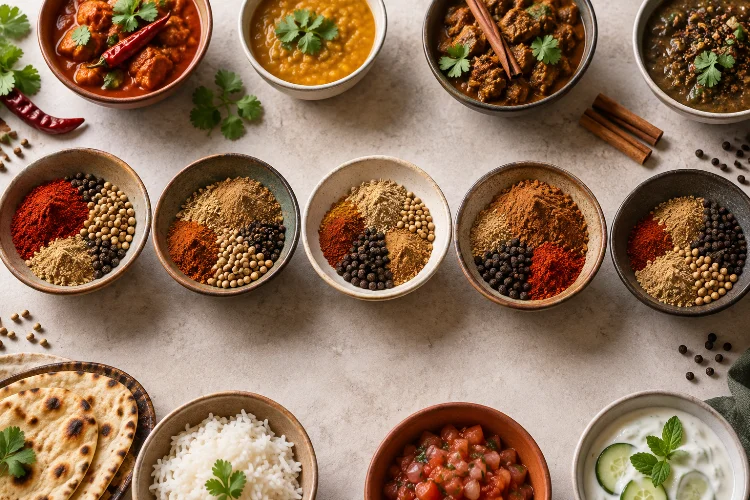
Two kitchens can use cumin, coriander, chile, cinnamon, and black pepper yet produce food that tastes completely different. The secret is often not the ingredient list. It is the ratio. One cuisine may make coriander…
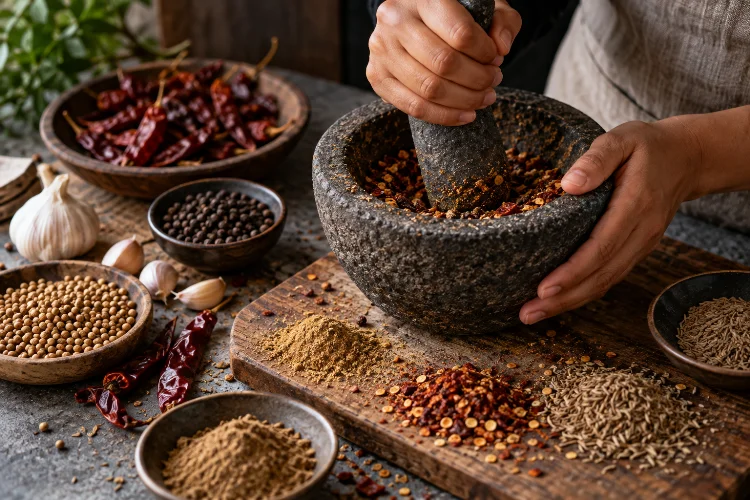
Take the same coriander seeds, peppercorns, dried chiles, cumin, and garlic, then process them in two different ways. Pound one batch slowly in a mortar and pulverize the other in a high-speed grinder. Even with…
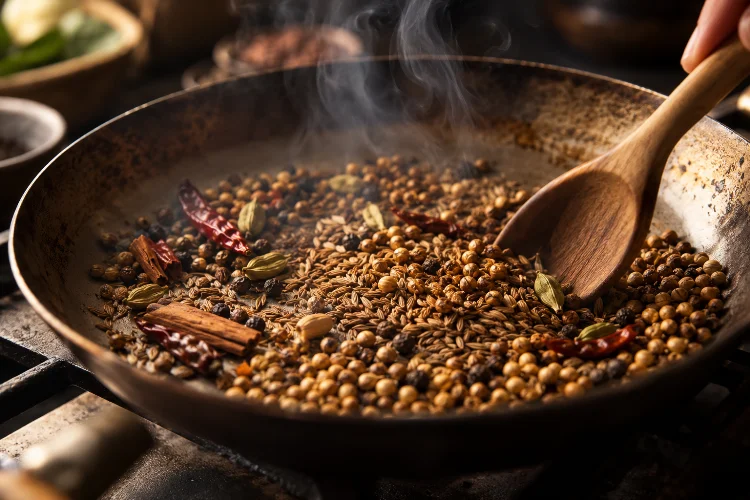
A spoonful of raw cumin smells earthy and sharp. Toast those same seeds for a minute or two, and suddenly the aroma becomes warmer, nuttier, and noticeably deeper. Nothing new has been added, yet the…
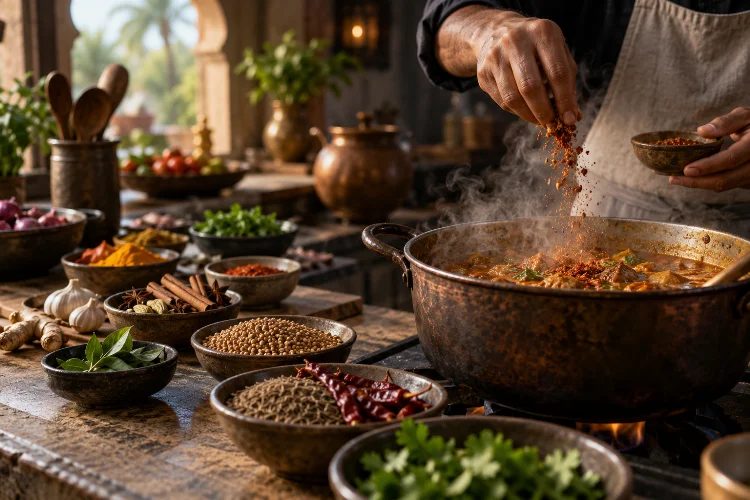
A great spiced dish rarely tastes like someone simply emptied a spice cabinet into the pot. Instead, the flavors seem to arrive in stages. You might notice warm cumin first, then citrus-like coriander, a little…
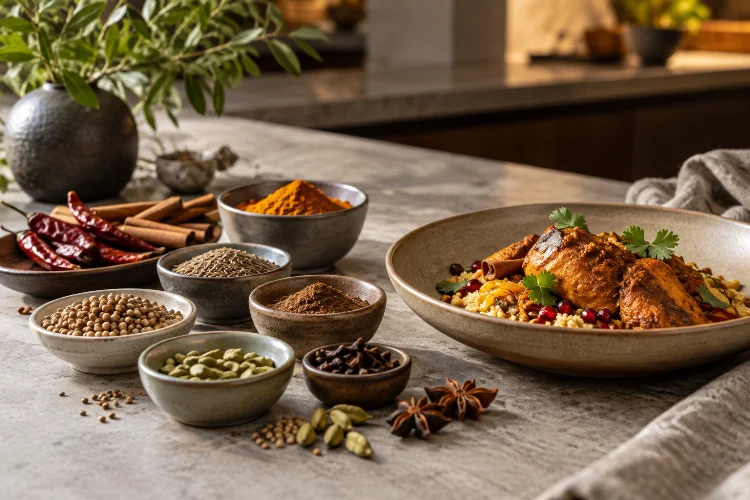
Open a jar of garam masala, ras el hanout, Chinese five-spice, or another traditional spice blend and the aroma can be surprisingly intense. Yet once that mixture enters a well-made dish, something interesting happens: no…