
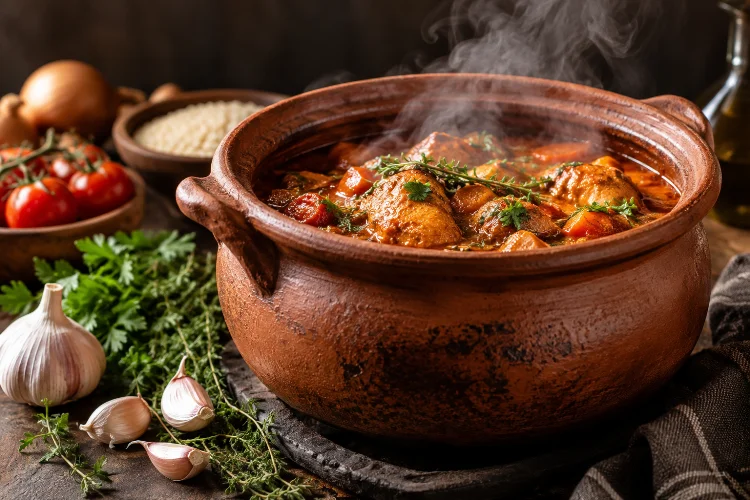
A stew cooked in a clay pot can contain exactly the same ingredients as one prepared in stainless steel, yet many cooks insist the final result feels noticeably different.
The meat may seem softer, the sauce more integrated, and the aroma somehow deeper. Rice cooked in earthenware can develop a distinctive texture, while soups slowly simmered in clay often feel more rounded than versions prepared quickly over intense heat.
So what is actually happening?
Understanding how clay pot cooking changes texture, aroma, and flavor development requires looking at the physical properties of the vessel as well as the way cooks use it.
Clay generally responds to heat differently from thin metal cookware, and factors such as porosity, thickness, thermal conductivity, moisture, and slow heating can all affect the cooking environment.
Traditional communities discovered these effects long before modern food science attempted to explain them.
From Asian soup pots and Mediterranean earthenware to African cooking vessels and Latin American ollas, clay cookware has remained important because the vessel itself becomes part of the technique.
Clay Transfers Heat Differently From Metal Cookware
The biggest difference begins with heat.
Metal cookware, especially aluminum and copper, transfers thermal energy very quickly. Put a thin metal pan over a strong flame and its temperature can rise rapidly.
Clay generally behaves more slowly.
Research into archaeological ceramics shows that thermal conductivity depends on factors including porosity, firing temperature, mineral composition, and the degree of vitrification of the ceramic material.
Ancient potters could change these characteristics by adjusting the clay mixture and manufacturing process.
That slower response can be useful for cooking.
Instead of exposing food to sudden temperature changes, thick earthenware can gradually accumulate heat and release it into the ingrediants. Once warm, some clay vessels also remain hot after the heat source has been reduced.
This helps explain why clay cookware works especially well for dishes that benefit from long, steady preparation.
A metal pan often rewards speed and precise burner control. Clay tends to encourage patience.
Gentle Heat Can Produce Softer, More Integrated Textures
Texture is one of the most noticeable differences in clay-pot cooking.
When a stew, soup, or braise warms gradually, ingredients have more time to soften without being aggressively disturbed by intense boiling. Meat can tenderize, beans become creamy, and vegetables release starches and soluble compounds into the surrounding liquid.
Traditional Hakka medicinal soups offer a useful example.
Research documenting Hakka food traditions in China describes meat and medicinal plants being placed in clay pots, covered with water, brought to a boil, and then simmered for one to three hours.
That extended low-intensity cooking helps create a broth in which individual ingredients become more integrated.
Rice can also respond well to stable heat. Rather than constantly moving between strong boiling and cooling, grains can absorb liquid steadily.
The result depends on the pot, recipe, fire, and temperatre, so clay does not automatically make every dish more tender. The advantage comes from the cooking environment it encourages: gradual heating, sustained warmth, and relatively gentle preparation.
Moisture Control Changes the Way Food Feels
Clay cookware is often described as “breathing,” but the reality depends heavily on how the vessel was manufactured.
Unglazed earthenware is typically more porous than fully vitrified or heavily glazed ceramics. That means some vessels can interact with moisture differently from nonporous metal cookware.
A particularly interesting example comes from Sri Lanka.
Traditional meekiri, a fermented buffalo-milk curd, has long been stored and sold in clay pots. Research on the product found that the vessels can absorb excess whey, helping maintain the curd’s characteristic textural properties.
Consumers also showed a preference for clay-pot versions over products stored in plastic, particularly in terms of flavor and texture.
This illustrates an important point: the vessel can influence food even after active cooking ends.
In stews and braises, moisture behavior works differently, especially when a lid is used. A covered clay vessel can maintain a humid environment while still allowing controlled evaporation depending on its construction.
That balance can produce food that stays moist while its sauce slowly becomes more concentrated.
Slow Cooking Allows Aromas to Develop Gradually
Aroma is created not only by ingredients but also by timing.
Garlic added to hot oil behaves differently from garlic simmered slowly in broth. Spices heated aggressively can become toasted or even bitter, while the same spices exposed to moderate heat for longer periods may release their aromatic compounds more gradually.
Clay pots naturally support this slower style of cooking.
As temperature builds, fats begin carrying spice aromas throughout the dish. Onions soften, vegetables release sweetness, and herbs contribute volatile compounds into the enclosed cooking environment.
A heavy lid can help keep some aromatic steam around the food instead of immediately allowing it to escape.
This does not mean the clay itself magically creates flavor.
The effect usually comes from an interaction between vessel design, heat level, moisture, fuel, ingredients, and time.
Studies of cooking practices in Peru found that participants frequently preferred foods such as beans, soups, and quinoa prepared in clay vessels, describing the taste as different from food cooked in metal pots.
Those reports are sensory preferences rather than proof of one universal chemical effect, but they show how strongly cookware can become associated with a particular flavor experience.
Earthenware Encourages Flavor Concentration Without Aggressive Heat
Deep flavor often comes from concentration.
When water slowly evaporates from a sauce, flavors become more intense. Sugars, salts, acids, proteins, fats, herbs, and spices become more noticeable because there is less water diluting them.
A clay pot can make that process easier to control.
Because earthenware generally heats less aggressively than thin metal, a stew can simmer for a long period without needing constant high heat. The sauce gradually thickens while the food continues absorbing seasoning.
This is particularly effective for dishes containing legumes, meats, or vegetables that require time.
Consider a bean stew.
At first, the broth may taste watery and the seasonings separate. After prolonged simmering, some beans begin releasing starch, fats become dispersed through the liquid, and spices are distributed more evenly.
By the end, the dish feels like one unified preparation rather than beans sitting in flavored water.
That development is partly about chemistry and partly about patience.
Clay simply provides a particularly suitable environment for it.
Traditional Clay Pots Connect Cooking With Local Materials
Clay cookware is also shaped by geography.
Different regions have different soils, mineral compositions, firing traditions, shapes, and vessel designs. As a result, “clay pot” does not describe one universal type of cookware.
Serbia’s Zlakusa pottery provides a useful example.
UNESCO recognizes the traditional production of unglazed cooking vessels made from clay and calcite in the village of Zlakusa. The cookware is still used in homes and resturants for thermal food processing, including bread and meat preparation.
Similar traditions appear across the world.
Among the Awajún people of Peru, pottery has long been used for cooking, eating, drinking, and ceremonial activities. The knowledge involved in gathering materials, shaping vessels, firing them, and using them is transmitted between generations.
In Botswana’s Kgatleng District, earthenware vessels traditionally serve multiple purposes including cooking, fermenting sorghum, and storing liquids.
The pot is therefore not just equipment.
It can represent locally adapted material technology built around specific foods and cooking habits.
Clay Pots Can Influence Fermentation as Well as Cooking
Earthenware has historically been valuable for more than direct heating.
Clay jars and pots are widely associated with fermentation because they provide enclosed environments where microorganisms can transform food over time.
Traditional Ethiopian foods offer several examples.
Research on Shameta, a fermented cereal-based food, describes fermentation in earthenware vessels, followed by cooking with spices and herbs. Clay pots used during later stages may even be exposed to aromatic smoke before the food is placed inside.
That creates several potential layers of flavor.
Fermentation introduces acidity and microbial aromas. Cooking develops roasted and spice notes. The vessel and preparation method influence moisture and storage conditions.
This illustrates why traditional food often becomes difficult to separate into simple variables.
Changing the pot may also change the technique.
And once the technique changes, flavor can change with it.
Clay Pot Cooking Requires Different Heat Management
Clay cookware should not always be treated like a metal saucepan.
Sudden thermal changes can damage some earthenware vessels. Placing a cold pot over extremely intense heat – or adding very cold liquid to a scorching-hot vessel – can create thermal stress and potentially cause cracking.
Traditional cooks often respond by increasing heat gradually.
This slower approach also affects food.
Instead of quickly heating a sauce to an aggressive boil, the cook allows the vessel and contents to warm together. Once the pot reaches the desired temperature, stored heat helps maintain cooking even when the fire is reduced.
This requires a slightly different rhythm.
Rather than constantly adjusting the flame, the cook anticipates what the vessel will do several minutes later.
That kind of sensory judgement is central to many heritage cooking traditions. UNESCO notes that traditional food knowledge often consists of techniques and practices passed from generation to generation, not simply finished dishes.
Knowing the pot is therefore part of knowing the recipe.
Food Safety Matters When Choosing Modern Clay Cookware
The romantic image of cooking in handmade pottery should come with one practical warning.
Not every decorative clay pot is safe for cooking.
Some ceramic glazes can contain lead or other potentially harmful substances. Research examining glazed clay cookware has highlighted the possibility of lead leaching when unsafe materials or manufacturing methods are used.
That means cookware should come from a reliable maker and be specifically intended for food preparation.
Glazed and unglazed vessels also behave differently.
A glaze can reduce porosity, meaning some of the moisture behavior associated with traditional unglazed earthenware may be reduced or eliminated. Meanwhile, modern flame-resistant ceramic cookware may be designed differently from handmade traditional pottery.
For practical home cooking, always follow the manufacturer’s heating, soaking, cleaning, and stove-use instructions.
Traditional technique works best when paired with modern awareness of food safety.
Understanding how clay pot cooking changes texture, aroma, and flavor development reveals that the difference is not based on one mysterious property of clay.
Earthenware can heat more gradually than many metal pans, retain warmth, interact with moisture, and encourage long cooking at relatively steady temperatures. Those conditions can soften ingredients, concentrate sauces, integrate spices, and preserve aromatic complexity.
Its importance is also cultural. From Serbian cooking pottery and Hakka soups to Sri Lankan fermented dairy and African earthenware traditions, clay vessels have evolved alongside the foods prepared inside them.
Try comparing the same slow-cooked dish in clay and conventional cookware. Pay attention to texture, evaporation, aroma, and cooking speed rather than expecting instant magic.
The preperation may take longer, but you will better understand why earthenware has remained part of human kitchens for generations.
